

Authority & Allegiance
By Rebecca DeLucia, Next Generation Pastor
Today’s Bible reading, Matthew 8, reads more like a comic book than a passage of Scripture. Miracle after miraculous miracle unfolds before us, each one building to one epic conclusion: the authority of Jesus. His authority extends to and supersedes disease, distance, downpour, and demons…and because of that authority,
it demands our allegiance.
The chapter begins in verses 1–4 with Jesus’ encounter with a man suffering from leprosy. In the ancient world, leprosy was more than a devastating disease; it was a social sentence. Lepers were cut off from their families, excluded from worship, and forced to live as outcasts. The man approaches Jesus with remarkable faith, saying, “Lord, if you are willing, you can make me clean.” Notice that he does not question Jesus’ ability. His only uncertainty is whether Jesus is willing.
Jesus’ response reveals both His power and His heart. “I am willing,” He says, before reaching out and touching the man. With a single touch and a simple command, the leper is immediately healed. Jesus demonstrates His authority over disease, but He also shows that true authority is marked by compassion. By touching the man, Jesus restores more than his physical health. He restores his dignity, welcomes him back into the community, and demonstrates that the Kingdom of God reaches those whom society has forgotten.
The next account, in verses 5–13, holds another epic story. A Roman centurion, a man of considerable earthly authority, comes to Jesus on behalf of his servant. The centurion understands authority perhaps better than anyone else, as a military officer, he knows that commands are obeyed without question. Recognizing something far greater in Jesus, he declares that Jesus need only speak the word, and his servant will be healed.
Jesus marvels at this man’s faith. Here is a Gentile soldier who understands what many in Israel have failed to grasp: Christ’s authority is not limited by proximity. The One who spoke the universe into existence by His word still rules through that same powerful voice. Jesus does not need to travel to the servant’s bedside or lay His hands upon him. His word alone will accomplish His will. Distance is no obstacle to the authority of Christ.
Later, in verses 23–27, we see Jesus and His disciples cross the water and as they do a violent storm erupts. Experienced fishermen panic while Jesus sleeps peacefully in the boat. Their fear contrasts sharply with His perfect confidence. When they wake Him, Jesus first rebukes their lack of faith before turning to the wind and the waves. With a word, He commands the storm to cease, and immediately there is complete calm.
This miracle is especially significant because throughout the Old Testament, authority over the sea belongs to God alone. The raging waters often symbolize chaos, disorder, and forces beyond human control. Yet throughout Scripture, it is the Lord who stills the roaring seas and rules over creation. By speaking to the storm and instantly bringing peace, Jesus is doing what only God can do. Creation recognizes its Creator. The winds and waves obey because they know the voice that first called them into existence.
Matthew records additional demonstrations of Jesus’ authority in verses 14–17 and 28–34. He heals Peter’s mother-in-law of her fever and restores countless others suffering from sickness. Every miracle points to the reality that the promised Messiah has come to restore what sin has broken.
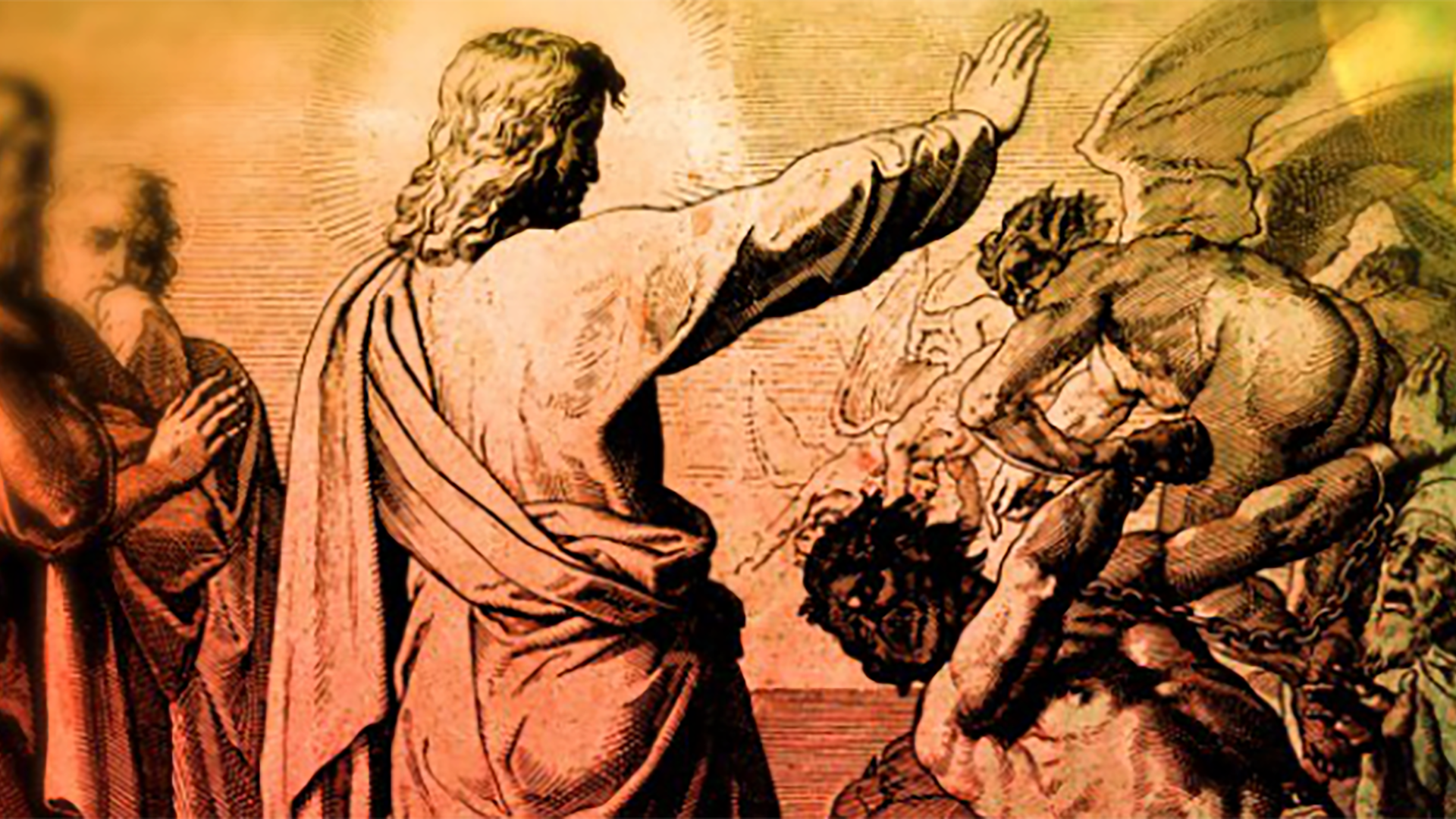
Finally, Jesus encounters demon-possessed men living among the tombs. These men are so violent that no one dares pass by them. Yet the demons themselves immediately recognize Jesus’ authority. They do not challenge His authority; they acknowledge it, they do not question whether they must obey; they only ask where they will be sent. At His command, they flee into a herd of pigs.
Even the spiritual realm is subject to Christ. Demons, who terrify and overpower human beings, are utterly powerless before Him. Once again, Jesus simply speaks, and evil retreats. His authority is absolute over every realm of creation; physical, natural, and spiritual. There is no force beyond His control, no enemy beyond His power, and no corner of creation outside His sovereign rule.
Matthew 8 does not simply reveal Christ’s authority; it also reveals the response His authority requires. Nestled among these miracle accounts, in verses 18–22, Jesus speaks about the cost of following Him. One man enthusiastically offers to follow wherever Jesus goes, only to learn that discipleship may mean sacrificing comfort and security. Another asks first to bury his father before following, but Jesus calls him to place the Kingdom above even the strongest family obligations.
These verses remind us that if Jesus truly possesses absolute authority, then He cannot simply be admired, He must be obeyed. His rule calls for wholehearted allegiance. There can be no earthly job, relationship, ambition, possession, or personal comfort that ultimately takes precedence over following Christ. The King who commands storms, diseases, and demons also has the right to command our lives. Following Him is not simply adding Jesus to our lives; it is submitting every part of our lives to His rule.
That can sound intimidating until we remember what kind of King Jesus is. Matthew 8 has already shown us His heart. He reigns with absolute authority, but it is compassionate authority. He welcomes the outsider. He restores those who have been cast aside. He brings peace where there was chaos, healing where there was brokenness, freedom where there was bondage, and joy where there was sadness. The King who commands the storm is the same King who reaches out and touches the leper. The One before whom demons tremble is the One who welcomes sinners with compassion.
The question Matthew leaves for every reader is not whether Jesus has authority; the chapter makes that abundantly clear.
The real question is whether we will joyfully submit ourselves to that authority.
The One who rules over disease, distance, downpours, and demons also calls each of us to trust Him completely, to follow Him wholeheartedly, and to live as citizens of His Kingdom, where He reigns with perfect power and perfect compassion.