

The Shepherd of Easter
A post by Rebecca DeLucia, Next Generation Pastor
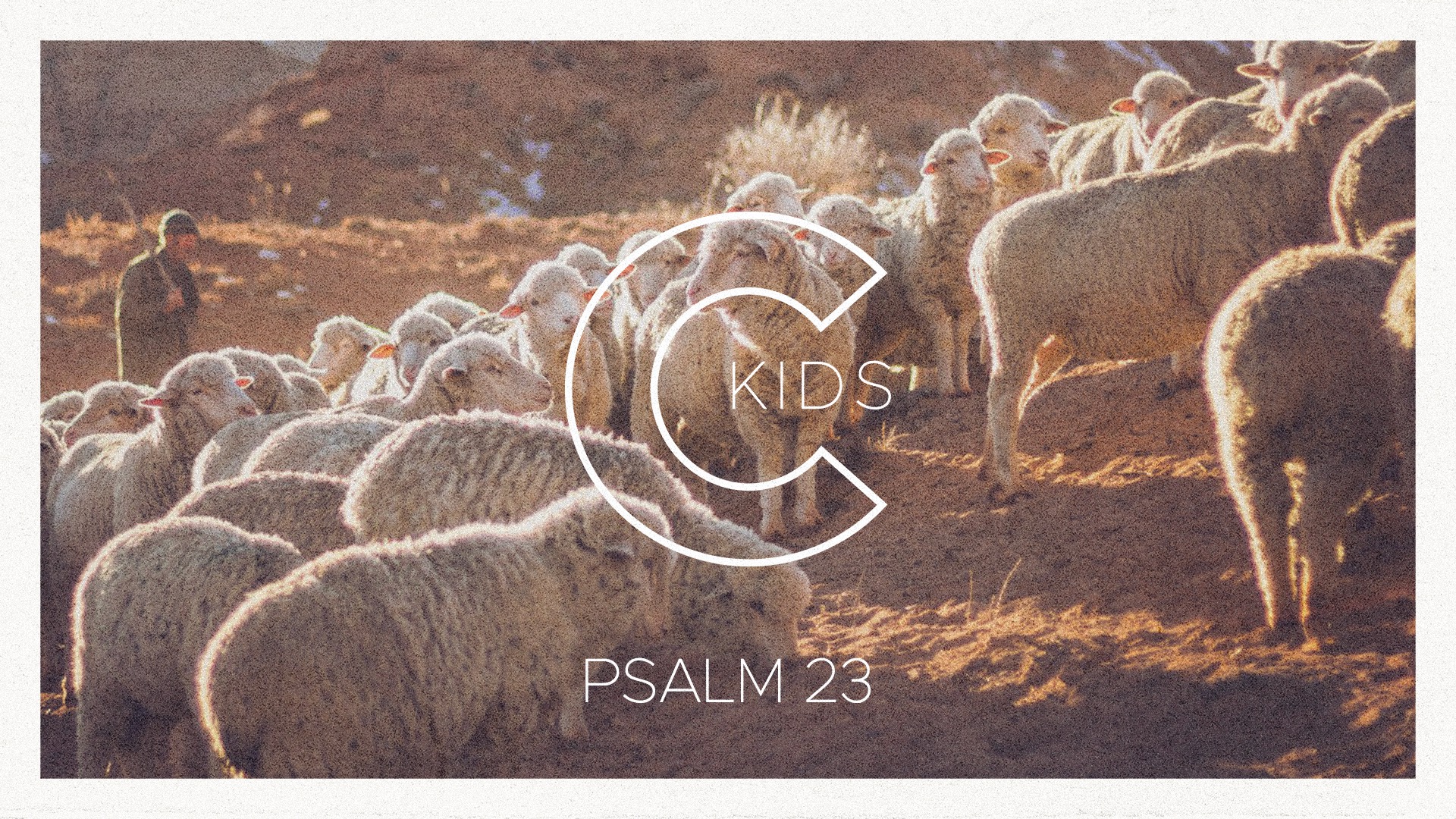
Since January Central Kids has been memorizing Psalm 23 and on Sunday we got to see the fruit of that labor. What struck me this week as I watched the video over again (it is just so sweet!) was the deep connection Psalm 23 has to Easter.
Psalm 23 is often used for quiet, heavy moments; hospital rooms, funerals, seasons of grief. But it was never meant to live only there because it speaks just as clearly into the middle of ordinary, busy, stretched-thin life. And when read through the lens of Easter, its familiar words become even more impactful as you trace the shape or redemption.
David begins with a deeply personal statement, “The Lord is my shepherd.” In David’s world, a shepherd wasn’t a comforting metaphor it has become in ours, it was a full time, demanding job. Sheep depended on the shepherd for everything: food, water, protection, direction. Sheep are not very smart so when left alone, they wandered, panicked, and got stuck. We tend to imagine ourselves as capable, yet much of our stress tells a different story. We carry pressure we can’t sustain. We chase things we think will satisfy us, only to feel empty again. We are not very smart because the truth is, we are not meant to carry life alone.
And here is one place where Easter meets Psalm 23. Because the Shepherd David describes is not just a poetic depiction of a person, but a real Shepherd revealed in the person of Jesus. Not distant, but stepping directly into the human condition. He knows hunger, grief, betrayal, and suffering. He doesn’t guide from afar; He walks with us.
The Shepherd of Psalm 23 has taken on flesh. In fact, the Shepherd enters the condition of the sheep. He does not remain distant from hunger, grief, betrayal, or death. He assumes them. The One who leads beside still waters will thirst. The One who restores souls will be “troubled in spirit.” The Shepherd becomes the Lamb.
Then David continues, “The Lord is my shepherd; I shall not want.” This isn’t a promise of an easy life or fulfilled wishes. It’s deeper than that. Beneath all our wants, success, recognition, stability is a greater need. A need to be known, guided, forgiven, and loved. Easter speaks directly to that need. The Shepherd doesn’t just provide; He gives Himself.
“He makes me lie down in green pastures. He leads me beside still waters. He restores my soul.” Rest is one of the rarest experiences in adult life. Even when we stop, our minds keep moving. Did you know sheep won’t lie down unless they feel safe? That means the kind of rest David is talking about isn’t about perfect circumstances, it’s about trust.
Easter reshapes this image. Because the path to restoration doesn’t bypass hardship, in fact, it passes straight through it. Before resurrection morning comes Gethsemane’s anguish, the cross’s brutality, and the silence of the tomb. The green pastures and still waters are not the absence of struggle, but the presence of God within it.
“He restores my soul” is not just about feeling better. It is about being made new. Easter is restoration at its deepest level, not a return to what was, but a transformation into something greater.
“He leads me in paths of righteousness for His name’s sake.” We often imagine the “right path” as smooth and straightforward. But the path Jesus walks leads to the cross, a place that appears anything but right or victorious. Easter reveals that what looks like defeat can become redemption. To follow the Shepherd, then, is to walk a path shaped by trust in God’s purposes rather than appearances, following the Shepherd doesn’t mean avoiding difficulty. It means trusting that even the hardest roads are not without purpose.
“Even though I walk through the valley of the shadow of death, I will fear no evil, for You are with me.” This is where the connection to Easter becomes unmistakable. The valley is not hypothetical. It is real loss, real fear, real suffering and ultimately, death itself. We do not avoid this valley; in fact, Jesus entered it fully. He walked straight through its depths. And then He emerged victorious. That is what the word “through” represents, and it changes everything. We do not dwell in the valley; we pass through it. Because the Shepherd has already walked that road, fear no longer has the final word. God’s presence does. Not only that but death is no longer a final dwelling place but a passage. Its power is real, but it is no longer ultimate. Because Christ has overcome it. “You are with me” becomes an unbreakable promise, grounded not in circumstance but in resurrection.
“Your rod and your staff, they comfort me.” The shepherd’s tools are signs of active care, protection, correction, and rescue. At the cross, we see the cost of that protection. The Shepherd lays down His life for the sheep. At the resurrection, we see its power. This love is not passive or fragile but rather, it is victorious.
Then the image shifts. “You prepare a table before me in the presence of my enemies.” The field becomes a table. The shepherd becomes a host. In David’s world, to sit at someone’s table meant acceptance, belonging, and protection and yet the enemies are still present. Easter doesn’t erase every difficulty, but it changes what has ultimate authority. Sin, death, and fear are no longer final. The resurrection happens in the middle of a still broken world. The table is set not in perfect safety, but in the presence of God’s goodness despite everything that opposes it.
“You anoint my head with oil; my cup overflows.” Anointing speaks of being chosen, known, set apart. Easter reinforces this truth: you are not overlooked. You are pursued with intention. The overflowing cup reminds us that life with God is not defined by scarcity, but by abundance
“Surely goodness and mercy shall follow me all the days of my life. And I will dwell in the house of the Lord forever.” The word “follow” can also mean pursue. This is where Psalm 23 and Easter beautifully meet. Easter is the ultimate picture of God pursuing us, moving toward us in love, even when it leads to the cross. Goodness and mercy are not abstract ideas. They are embodied in Jesus. And they do not give up. The psalm begins with a shepherd and ends with a home. Easter assures us that this ending is real. The resurrection is not just about Jesus’ victory; it is about the future it opens for us. The Shepherd who walks with us is also leading us somewhere, through daily life and ultimately home. So Psalm 23 is more than a comforting poem, it is a roadmap of redemption.
A story of a Shepherd who sees wandering sheep and comes after them. Who leads them, restores them, and walks with them through the valley. It tells the story of a Shepherd who becomes a Lamb, who enters death and overcomes it, who restores His people not by avoiding suffering but by redeeming it. And it assures us that the final word is not the valley, but the house of the Lord, a place of belonging that lasts forever. where the Shepherd Himself is our everlasting peace.