

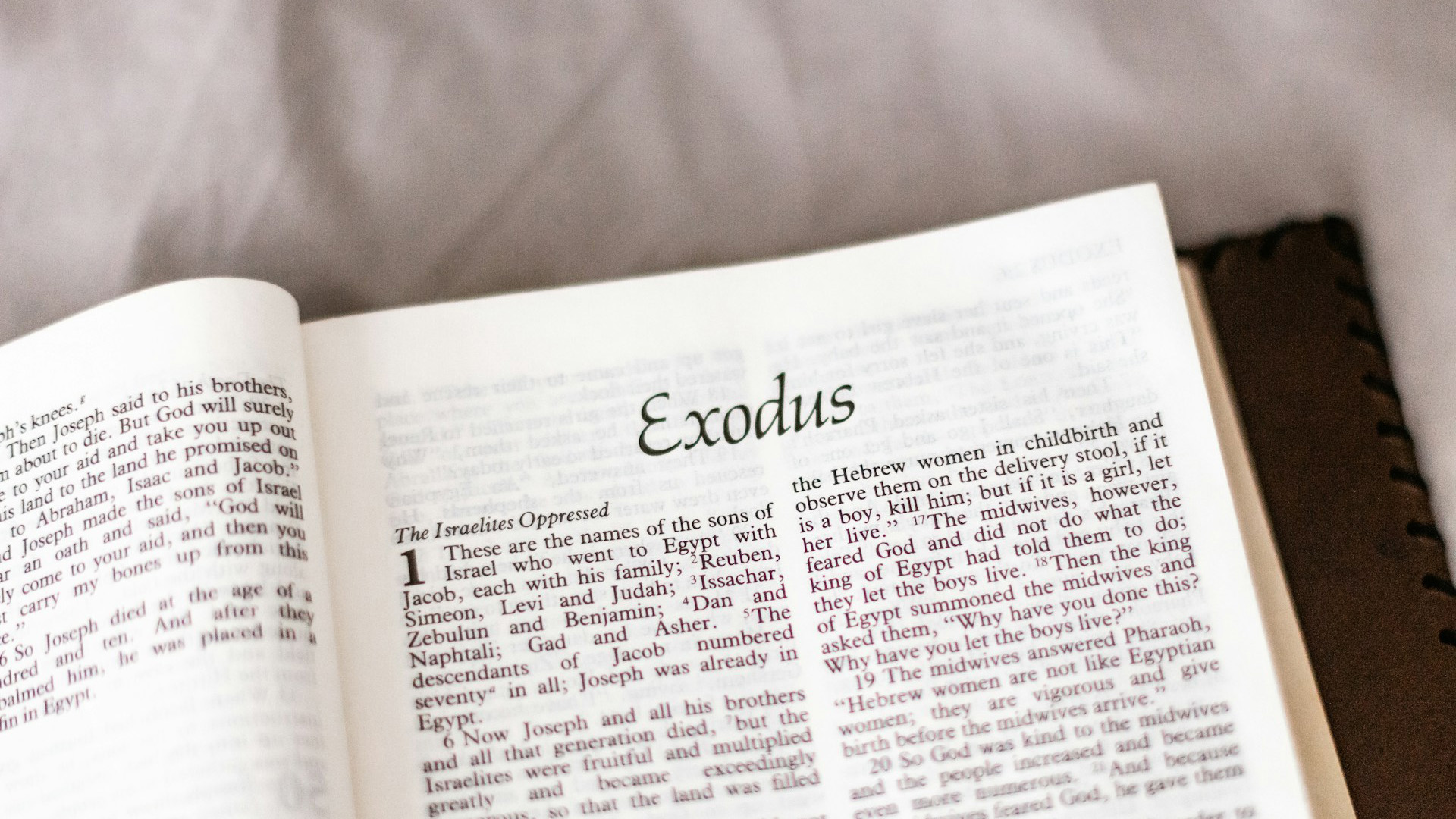
The God of the Exodus
A blog by Rebecca DeLucia.
I (Rebecca) have vivid memories of being ten years old and going with my Sunday School class to see The Prince of Egypt. I remember the candy, the smell of the movie theatre popcorn, one of the best soundtrack scores ever and the epic ice cream sundae bar my teacher had set up for us back at her house. But mostly, I remember gathering around her dining room table, eating mountains of ice cream and listening to her read the story of Moses from Exodus.
Perhaps this is where my love of Venn Diagrams came to exist but for sure, this is where my love for the stories of Scripture came to exist. It was the first time I truly felt immersed into the story, yearning to hear more and understand the details. Reading Exodus over the last few days really took me back to this moment in my life but now I see not only the story of Exodus but the sweeping story of Scripture.
It comes as no surprise that the chariot races and bonds of brotherhood depicted in The Prince of Egypt are placed there merely for theatrical purposes. However, the themes of Moses’s both willingness and wrestling as he listened to God and the hardness of Pharaoh’s heart are ones that unfold side by side in the Book of Exodus.
When God calls Moses from the burning bush in Exodus 3–4, Moses does not respond with bold confidence but with hesitation and fear. His first response is insecurity: “Who am I that I should go to Pharaoh?”
Who am I…?
He sees his inadequacy before he sees God’s power.
Yet God answers not by boosting Moses’ self-esteem but by promising His presence: “I will be with you.” From the beginning, the story is less about Moses’ ability and more about God’s faithfulness to His covenant promises.
It’s less about “who am I?”, and more about “who is ‘I AM’?”
Moses worries that the Israelites will not believe him, and God provides signs. He protests that he is slow of speech, and God declares that He is the Creator of the mouth and will help him speak. Even when Moses asks God to send someone else, the Lord patiently provides Aaron as support.
Moses’ wrestling reveals fear and weakness, but God’s steady reassurance shows patience and commitment. When obedience leads to increased hardship and Moses questions why things have grown worse, God does not abandon the mission. Instead, He reaffirms His covenant with Abraham, Isaac, and Jacob and promises deliverance. Through every hesitation, God is working, shaping a reluctant shepherd into a leader and moving history toward redemption.
Pharaoh however represents a different kind of struggle. Throughout Exodus 7–14, Pharaoh repeatedly hardens his heart against God’s commands but still God’s faithfulness is evident. He declares that these events will display His power so that both Egypt and Israel will know that He is the Lord. Each plague confronts false sources of security and power, demonstrating that no earthly ruler stands above Him. Pharaoh’s hardened heart highlights human pride, but God’s actions reveal His commitment to free His people and fulfill His promises.
Together, Moses and Pharaoh show two forms of resistance: fear and pride. Yet over both stands God who accomplishes His purposes despite human weakness and rebellion. Moses’ insecurity does not thwart God’s plan; instead, God works through it. Pharaoh’s defiance does not cancel God’s covenant; it magnifies His deliverance.
May this story offer us profound hope because, let’s face it, we are not that different. We hesitate. We doubt. We resist. But,
God remains steady.
He is patient with our fear and in our wrestling. God is unshaken by our resistance remaining faithful to His promises and relentless in His redemption. He continues to work, writing a story far greater than our fears.